 Synapse Group
PLC, SCADA and DCS retrofit
PLCs without spares, SCADA without support, ageing workstations and undocumented serial networks. Engineering, migration, logic, screens, FAT/SAT, commissioning and as-built documentation.
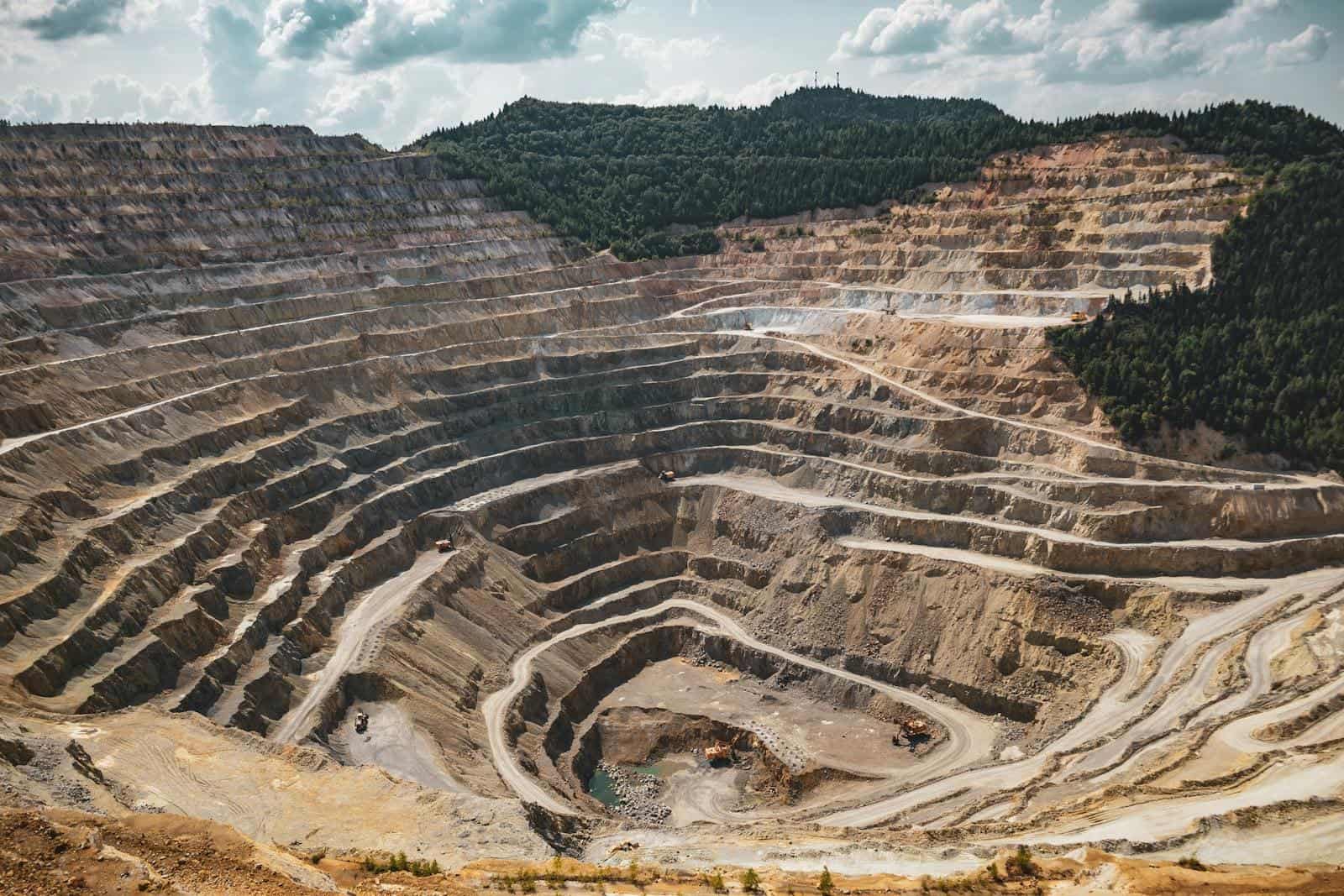
Mining, hydrometallurgy and leaching
We instrument, automate and monitor the assets where an hour of downtime, a measurement error or an exposed person costs dearly. Predictive maintenance, hydraulic monitoring, remote operations and heap irrigation control.
Sector challenges
With declining grades you have to move, crush, grind and pump more to produce the same. The pressure does not fall on one machine: it falls on the availability of the whole plant.
27.6 → 33.2 TWh
Projected electricity consumption of Chilean copper mining between 2025 and 2034: +20.2%, against an 8.3% rise in production.
Long-distance pumping, booster stations, pipelines and reservoirs. Every kilometre adds points where pressure, flow, corrosion and leakage have to be measured, and where a rupture is paid in production and in fines.
67.6%
Projected share of seawater in the mining water supply by 2034.
Crushers, conveyors, mills, pumps, thickeners and medium-voltage motors degrade before they fail. Without continuous measurement, that degradation is discovered once it has already stopped the line.
Blocked emitters, dry sectors, preferential channelling and broken lines. Manual inspection cannot catch it while it is happening, and the cycle is lost anyway.
DU ≥ 90%
Distribution uniformity set as the target in the public terms of the heap irrigation homogeneity innovation challenge Codelco published in 2026.
PLC, DCS, SCADA, historians, CMMS, ERP and OEM equipment from several generations coexisting on the same site. The problem is rarely missing data: it is that the data does not arrive together, in time, or where the decision is made.
What is being quoted
This is not a list of what we can do: it is what is being tendered and quoted in this industry right now. If your problem is on it, the conversation starts with context.
PLCs without spares, SCADA without support, ageing workstations and undocumented serial networks. Engineering, migration, logic, screens, FAT/SAT, commissioning and as-built documentation.
Vibration, temperature, current, ultrasound, pressure and flow on critical assets, to estimate degradation instead of maintaining by calendar or reacting to failure.
Pumping lines, water and slurry pipelines: high-frequency pressure, mass balance, transient detection and hydraulic models with anomaly detection.
Remote pump control, sequence automation, contextual video and alarm management into an integrated operations centre.
Pressure and flow per sector, inference of blockage, irrigation maps and alerts before the cycle is lost. This is the smart heap leaching project type.
Piezometry, inclinometry, GNSS, radar and drones integrated into a single view, with thresholds and escalation.
How we work here
Pressure, flow, level, vibration and temperature instrumentation on pumps, pipelines, conveyors and pads. PLC and actuators where you have to control, not just watch.
Distributed 4G or a dedicated link on sites with limited access, with autonomous power where the grid does not reach.
Instrumentation, SCADA and historian in a single operational view, integrated with the CMMS so an alert ends in a work order and not in an email.
Threshold, criticality, probable cause and action. The loop closes in the field: adjust pressure, close an irrigation sector, stop a pump before it cavitates.
We start with a bounded pilot, build alongside your operations team and measure what matters. If we propose something, we can also implement it.
What it is measured against
A pilot without a baseline is no basis for a scale-up decision. These are the indicators the work is designed against, measured before starting so there is something to compare with.
Solutions
Condition monitoring on pumps, motors and critical equipment, with the alert wired into maintenance.
View industryLeak, transient and degradation detection on pipelines, pumping lines and stations.
View industryMigrating obsolete control with the shutdown window bounded and the documentation current.
View industryMeasurement, connectivity and control of distributed assets, even without grid or coverage.
View industryFrom threshold alarm to event with context, criticality, probable cause and action.
View industryMeasuring energy per cubic metre and reordering pumping before buying equipment.
View industryBlocked emitter and dry sector detection, with a per-sector map and an alert inside the cycle.
View industryFrequently asked
Yes, and that is the usual case. Most projects start by reading what the PLC and the historian already provide, and add instrumentation only where the variable that matters is missing. Replacing the entire OT infrastructure is almost never the first step; when it genuinely is, it comes out of the diagnostic and is said before quoting.
With high-frequency pressure and flow at both ends, mass balance and transient detection over a hydraulic model of the line. The model is tuned with that pipeline's own history, because a leak signature is recognised against the normal behaviour of that line, not against a generic threshold.
Pressure and flow measurement per sector, stored history, and a layer that infers blockage by comparing expected against measured behaviour. On top of that come the irrigation maps, the per-sector alert and the prioritisation of field inspection.
The diagnostic takes 4 to 8 weeks and the pilot 3 to 6 months, bounded to one asset or one sector. Scope, timeline and success criteria are defined before anything is installed, with the baseline measured: a pilot that only proves the sensor works is no basis for a scale-up decision.
Yes. Integration over OPC UA, Modbus or MQTT is the normal path, and it is what allows starting with one asset without touching the rest of the plant. When the equipment is a closed OEM system, we instrument in parallel.
Contact
If you have an operational challenge, an innovation project in mind or a question about applying technology to your industry, get in touch.
proyectos@synapsegroup.techWe reply within 48 business hours.
Not ready to talk yet? Take the capabilities brochure: the six fronts we work across, what we build with, and how a project is contracted.